



SERP Conf. Rome 2026: 70% of Merchants Are Invisible to AI Buyers
 7
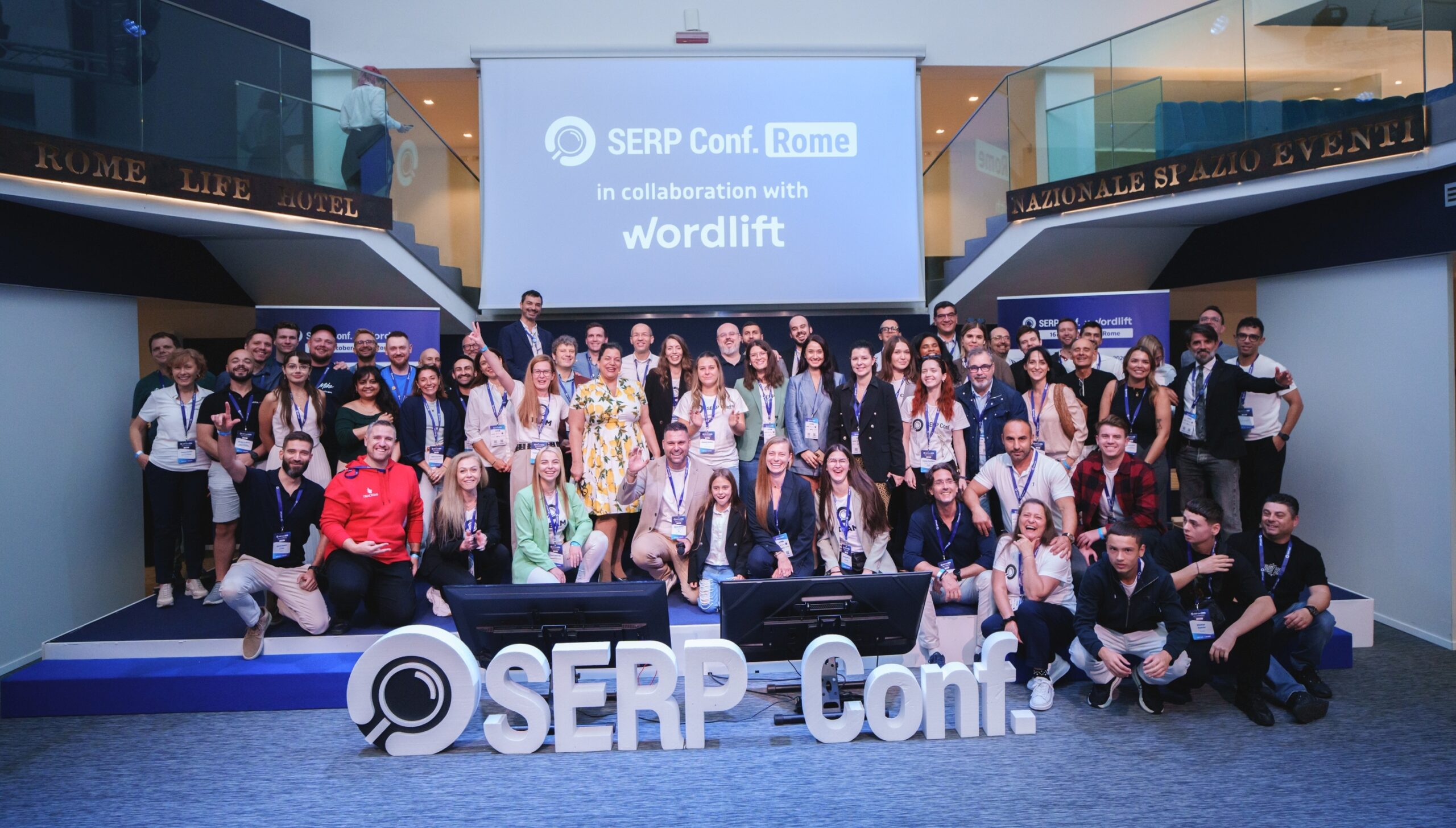
Practical takeaways from one of the year’s largest international SEO, AI, and e-commerce conferences, organized by Serpact – and what they mean for your business
“70% of leading e-commerce retailers are invisible to agentic commerce” – this statement by Amanda Beales captured the attention of visitors at Nacionale Spacio Eventi. It also became the most quoted quote from SERP Conf. Rome 2026.
AI is already shopping on people’s behalf, rather than simply helping them search for products. For businesses that want to remain visible in this new reality – where clicks are steadily declining and consumers are asking models directly or relying on AI Overview – the insights from the event are vital to the survival of every online retailer.

AI agents are already shopping on behalf of people
One of the most interesting presentations for attendees at SERP Conf. Rome 2026 was the one by Amanda Beales. She explained that AI agents do not browse the web like humans – they read structured data. While the human eye might overlook a minor inconsistency in a product description (or, for example, outdated availability data), an AI agent “picks up on” every detail. For an AI agent, inconsistent product information effectively means that the business in question literally does not exist. And something that does not exist cannot be recommended.

Crystal Carter, who was also among the speakers on the Ecommerce Marketing & AI panel, further emphasized the need for properly structured data. She explained in detail her personal concept of a “validation layer” – the moment when the AI agent (and often the buyer behind it) verifies whether it can safely proceed before completing the purchase. The entire process relies on the availability of clear, verifiable data: accurate pricing, actual availability, and reliable product information.
The practical takeaway for every business owner is straightforward: if the titles, prices, and availability of your products aren’t consistent across the board – on your website, in your product feed, and in your structured data – AI agents will simply skip over your business. Not because your product isn’t good, but because the machine never gets the chance to evaluate it.

Less Content, More Revenue
Murat Yatağan, who was part of Google’s Search Quality team for more than five years, shared an example that turned the logic of most marketing teams on its head: how reducing the amount of content on a website leads to better business results.
A B2B HR software company deleted or consolidated 70% of the pages on its website. The result was not a decline but growth – its conversions increased by 15%. Removing “weak” content does not reduce revenue. Such a step eliminates the noise that prevents both users and AI systems from discovering what the business actually offers.

The logic behind the example and the resulting outcome are simple: AI already produces “average” content for free and very quickly. A generic article, a generalized answer, a standard description – none of this carries any competitive value anymore, because anyone can generate it with a single prompt. The only things that hold value are the unique data and expertise that a business possesses – feedback from real customers, specific results achieved through the use of a given product or service, niche expertise, and so on. These are the elements of unique content that AI cannot “produce for you.”
Data Is the Foundation
In his opening presentation at the most popular panel, “SEO in the Age of AI,” Marco Giordano provided a practical example of how businesses can automate processes using AI. He shared his personal workflow with attendees at SERP Conf. Rome 2026 for identifying outdated content, analyzing clusters in search results, and more. Data from various sources such as GA4, Google Search Console, product feeds, and others must be clean and centralized – if the foundation is scattered and inconsistent, automation doesn’t solve the problem; it simply exacerbates it. Machines don’t work miracles, but if their work is based on chaos, that chaos can easily be amplified.

The same principle applies in full to product feeds in Google Shopping. Clean titles, correct codes, consistent prices and availability across Merchant Center, structured data, and the website itself – these are the factors that determine whether AI systems will even “see” your products, before the question of advertising or a CSS partnership even comes into play.
What Does This Mean for Businesses in Bulgaria
The launch of Google Shopping in Bulgaria, the growing role of CSS partners in making advertising budgets more effective, and the need for a technically sound foundation before any optimization – all of this is no longer a scenario from the future, but a prerequisite for visibility today. Businesses that wait for the official launch of the service in Bulgaria to get ready will lose out – by the time they’re ready, their competitors will have already built a track record and “earned” the trust of the algorithms.
That’s exactly why we at Serpact have developed a free quick test to check the readiness of any online store. In just 2 minutes – during which you’ll answer 18 questions – you’ll find out whether your product feed and store settings meet Google Shopping’s requirements, which elements are limiting your visibility, and what needs to be changed before it’s too late. The test gives you a clear answer based on real criteria, not assumptions.
SERP Conf. Rome 2026: A Brief Summary
Conferences like SERP Conf. aren’t just networking events – they share real, actionable growth models from people who have already tested them and seen positive results. For SERP Conf. Rome 2026, organized in partnership with WordLift, we made a point of bringing together top experts and organizing them into four panels by topic:

- SEO in the Age of AI
Marco Giordano demonstrated how data must be centralized and automated before AI can even be implemented, while Gianluca Fiorelli warned that artificial intelligence often confuses not the language but the market value of a given brand, providing the perfect answer to a specific customer’s query but for the wrong market. David Carrasco Pamies and Rad Palasuk participated in the subsequent Q&A session.
- E-commerce Marketing & AI
An all-female panel in which Crystal Carter presented the concept of a “validation layer” prior to a purchase via an AI agent, and Amanda Beales won over the audience with the statement: “70% of leading e-commerce retailers are invisible to agentic commerce.” Natalia Palmisano and Beatrice Gamba participated in the ensuing discussion.
- AI Search in the Real World
Purna Virji urged businesses to focus on revenue rather than hours saved, while Murat Yatağan explained how a company that removes some of its content increases conversions by 15% – an example summarized in the “Redirect, Shorten, Refresh” model.
- The Future of AI, SEO & Marketing
In the final segment of the conference, Andrea Volpini from WordLift explained that “zero-click does not mean zero-search,” while Yagmur Simsek presented her framework for visibility beyond rankings. The panel was moderated by Sante J. Achille and featured Federico Rebeschini.

The next edition of SERP Conf. will take place in Sofia in March 2027. In line with global trends, the event will place a special focus on CSS partnerships and the expansion of Google Shopping in Bulgaria. So be sure to reserve your spot now.


